Overview
Information Box Group
The CNBL is open! Get beam time
The CNBL now offers neutron diffraction capabilities. For all inquiries, contact us at cnbl@mcmaster.ca. Click here to submit a beam time request.
Launch of the CNBL
In November 2024, McMaster University and Neutrons Canada celebrated the launch of the CNBL — a new suite of facilities built to advance materials research in Canada. The CNBL has received funding to develop into a national neutron beam user facility with five beamlines. This expansion of the neutron beam lab is a priority for the neutron user community, as outlined in the Canadian Neutron Long Range Plan for 2025 to 2035.
Selected user experiments are being conducted to test and demonstrate the capabilities. Neutron beam users may now design experiments and discuss them with the instrument scientists. Submit proposals anytime. Formal calls for submissions will be announced soon.
Neutron beams are versatile and irreplaceable tools used to study materials, and the CNBL provides access to neutron diffraction capabilities for scientists throughout Canada.
Impact of Neutron Beams
The CNBL leverages 70 years of leadership in neutron beam materials research, supported by 100 research groups across Canada.
The socioeconomic returns on Canada’s investment in neutron beams have been conservatively estimated to be more than three times the original investment. This estimation is based on a thorough analysis of two significant areas of research: hard drives and electric vehicles.
In addition, Canadian research using neutron beams has made large impacts in areas such as nuclear power, hydro power, quantum innovation, food sustainability, aerospace, and industrial safety.
Neutrons Canada provides more information about the impacts of research using neutron beams.
Research Using Neutron Beams
Neutron beams are an essential tool for materials research and innovation, which in turn underpins technology solutions that tackle environmental, health, and information age challenges. Thousands of research teams across Canada study materials. Inevitably, many of them encounter materials problems that can only be solved using neutron beams.
Neutron beams penetrate dense materials like metals, allowing researchers to visualize interiors at the atomic scale without damage. Unlike other probes sensitive only to surfaces (for example, electrons or positrons) or near-surface regions (e.g. x-rays), neutrons enable detailed atomic-level characterization of various substances.
The CNBL is enhancing Canada’s materials research capacity, facilitating contributions that will support the country’s competitiveness and on the global research stage in areas such as:
- Quantum materials
- Energy materials
- Soft and biological materials
- Structural engineering materials
Neutrons Canada provides numerous examples of how Canadian research in such areas is affecting, and promises further breakthroughs in, clean energy, health and food security, electric vehicles, information technologies and more.
Beamlines
The CNBL offers neutron diffraction and small-angle neutron scattering. Reflectometry and stress-scanning capabilities are under development.
There are five neutron beamlines in operation or under construction, and all offer unique-in-Canada capabilities.
Click below to request access to the beamlines.
Current Instruments

MAD: McMaster All-Purpose Diffractometer
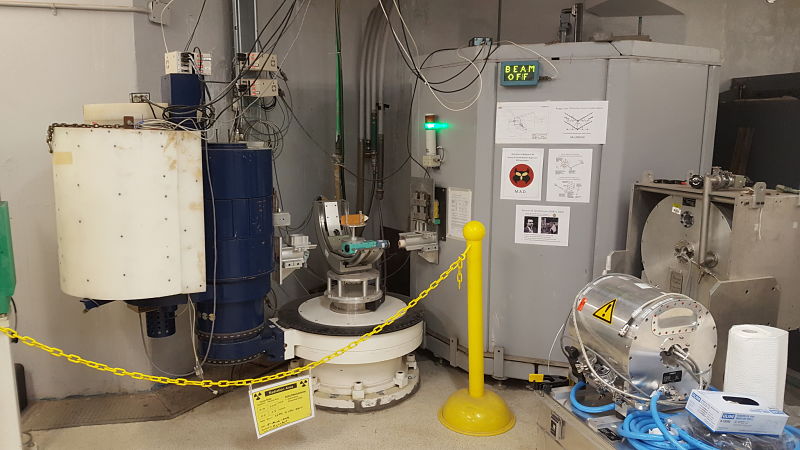
The McMaster All-Purpose Diffractometer (MAD) is a general-purpose neutron diffractometer, located on Beam Port #6 at the McMaster Nuclear Reactor. MAD was originally installed in 2010, initially operating in a triple-axis configuration with a 3He point detector. In Spring 2025, the instrument was upgraded with a new 800-wire linear detector (relocated from the C2 powder diffractometer at Chalk River). At present, MAD offers continuous detector coverage from ~ 5º to 85º at 0.1º resolution. This new configuration has dramatically increased the efficiency of data collection, particularly for neutron powder diffraction and reciprocal space mapping on single crystal samples.
MAD is regularly used for determination of crystal structures, identification of magnetically ordered ground states, and characterization of structural and magnetic phase transitions. In addition, this instrument provides a valuable tool for education, outreach, and training. MAD currently sits on the site of Bertram Brockhouse’s original McMaster triple-axis spectrometer, based on the same design that helped to earn Brockhouse the 1994 Nobel Prize in Physics.
For technical information, review the instrument spec sheet and sample environment capabilities.
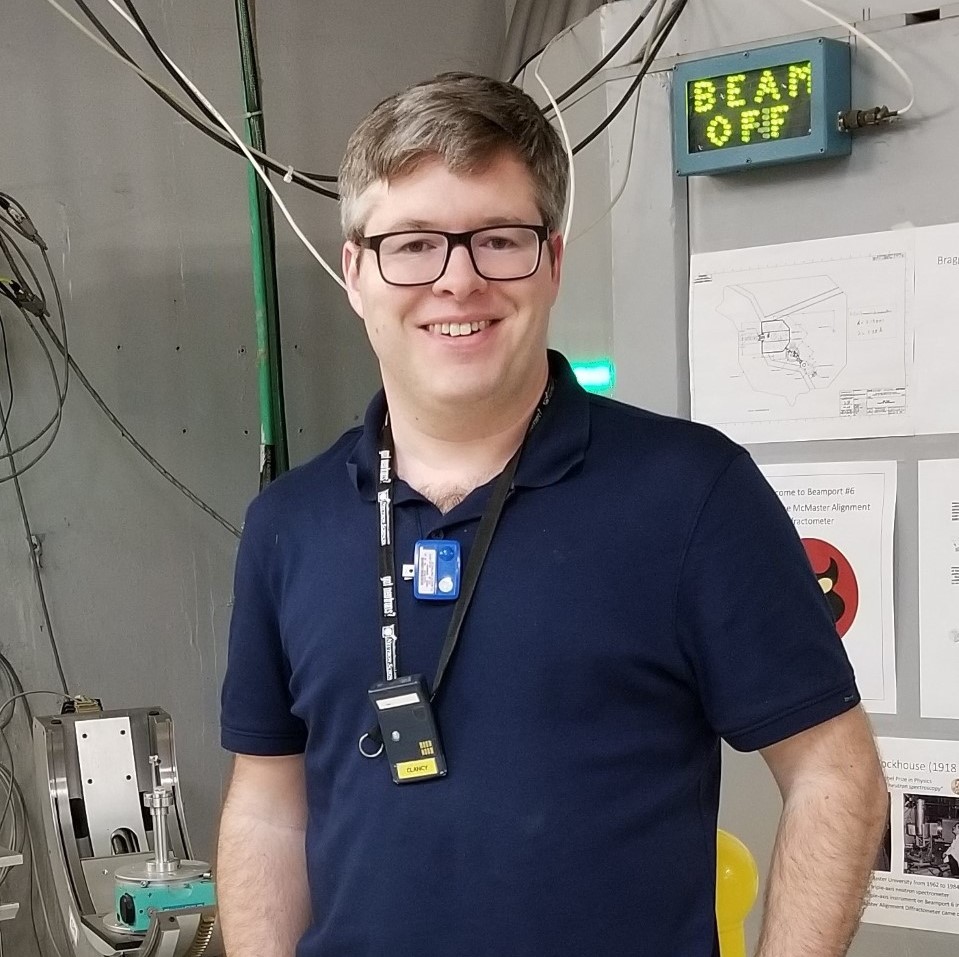
Staff contacts: Pat Clancy and Bo Yuan.

MacSANS: McMaster Small Angle Neutron Scattering
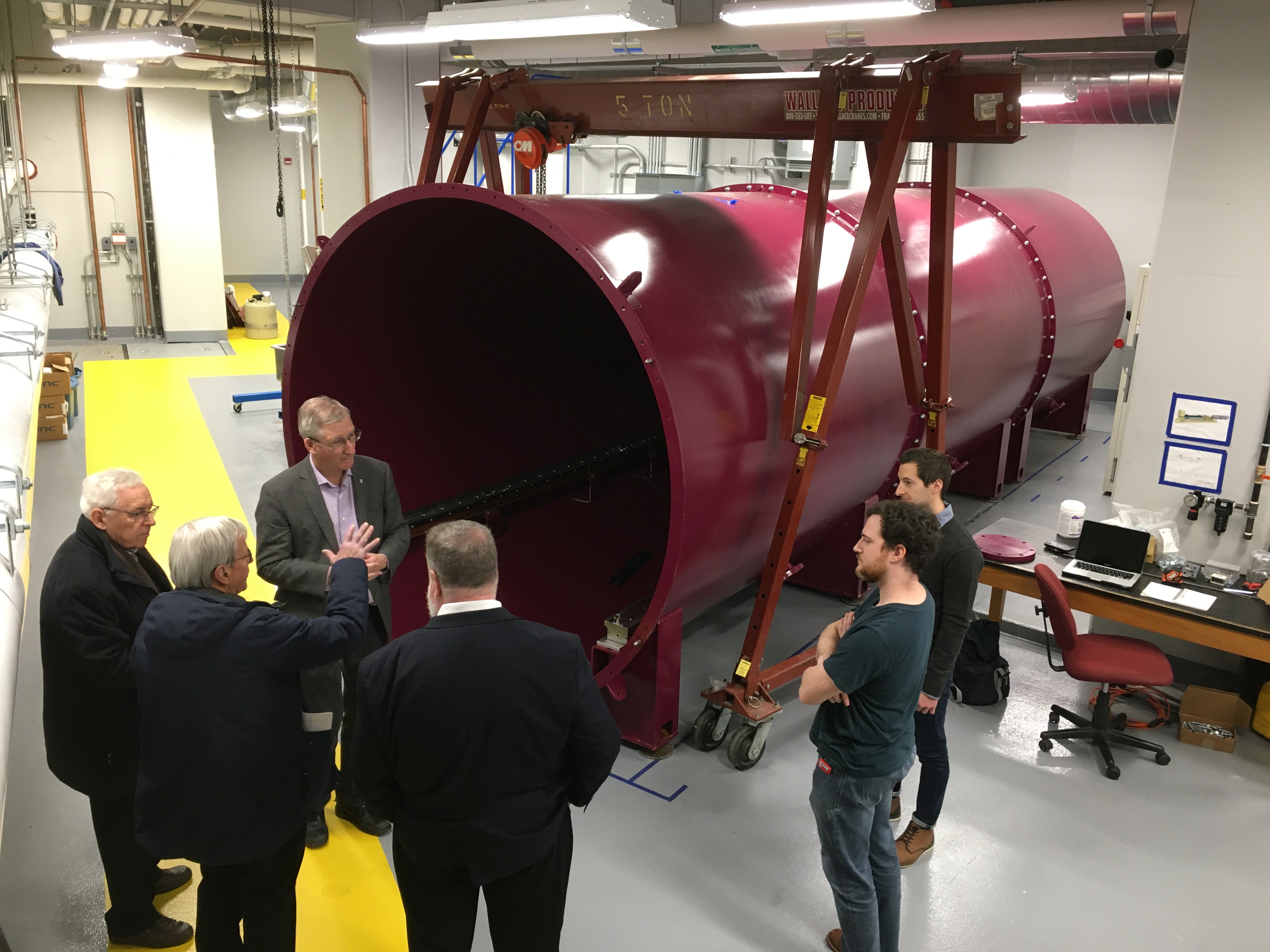
The McMaster Small-Angle Neutron Scattering beamline is currently in commissioning. MacSANS is a 24-metre-long instrument that extends into a subterranean guide hall outside of the reactor building. This feature allows a highly collimated beam for measurements at very small scattering angles.
SANS is a technique to probe the properties of materials on length scales extending up to 100 nm. Materials such as biomaterials, nanoparticles, and polymers have nanoscale structures that are uniquely probed by SANS. Steel processing companies have used SANS to characterize precipitates in their products to understand the manufacturing process and develop products with enhanced strength and toughness to ensure long-term reliability of pipelines and other steel structures. This instrument is a first-of-its-kind in Canada.
For technical information, review the instrument design sheet and sample environment capabilities.
Staff contacts: Eric Nicholson and Mitchell DiPasquale
Instruments Under Development
Powder Diffractometer
A new powder diffractometer is being designed for MNR. Powder diffractometers are some of the most prolific neutron instruments. They are in high demand for determining the chemical and magnetic crystallography of new materials and for establishing structure-property relationships and phase behaviour in a broad range of hard materials.
We will build a new instrument optimized to collect diffraction patterns over a large area, such as 120° horizontal scattering angle coverage, using a position-sensitive detector filled with He-3 gas. Geometric calculations show that its data collection rates will be at least as good as, if not better than, the former C2 powder diffractometer at the CNBC.
The instrument will be essential for many Canadian research programs. For example, powder neutron diffraction is the only technique for locating hydrogen in the unit cell of metal hydrides during in situ studies of hydrogen absorption and desorption, which is critical to determining how the metal alternates between hydrided and dehydrided phases. It is essential for solving the crystal and magnetic structures that produce the behaviours of thermoelectric and magnetocaloric materials and of permanent magnets that enable more energy-efficient technologies. It is essential for observing the locations of small ions in battery electrodes; determining the influence of minority alloying elements on strength; and observing the way that texture is inherited through phase transformations. It also is central to understanding how the chemical and magnetic structures relate to the electrical and magnetic properties in many quantum materials.
Anticipated Completion: 2028
Stress-Scanning Diffractometer
The L3 neutron stress-scanner is being relocated to MNR from the Canadian Neutron Beam Centre (CNBC). Neutron stress-scanners are frequently used by industry and university-industry collaborations to determine internal stresses in metallic parts that are safety-critical components of a structure, machine, or vehicle. The stress-scanner at the CNBC was used for most of this research in Canada until the CNBC closed in 2018. This instrument offers submillimetre sampling volume and is optimized for precise measurements of lattice strain (±1×10⁻⁴) as a function of position (±10 μm) within engineering components.
Neutron stress-scanning is the only non-destructive means to determine stresses deep within the same metallic part (e.g. components of a car or boat engine) both before and after it undergoes manufacturing processes such as heat treatment for relieving stress. It is often the only means to observe how stresses relax in alloys at elevated temperatures, which is needed to understand how materials behave around flaws (e.g. small cracks) in nuclear reactor components and hence to predict safe operating margins of power plants.
Anticipated Completion: 2029
Reflectometer
The D3 reflectometer is being relocated to MNR from the CNBC. Neutron reflectometers are high-demand instruments, typically oversubscribed by factors of 2 to 3. Due to an ever-increasing interest in the industrial applications of thin films and membranes, neutron reflectometry will continue to be an essential research tool well into the future. MNR’s reflectometer is optimized for determining chemical and magnetic profiles as a function of depth into the surface of materials fabricated as thin films or multilayers.
The reflectometer enjoyed a multidisciplinary user base at the CNBC. Neutron reflectometry is the only technique that has enough sensitivity to hydrogen atoms to determine the amounts and locations of hydrogen in copper coatings, and to track changes in these parameters non-destructively and in situ under changing physical, electrochemical, and environmental conditions. It is essential for developing bio-nanotechnologies for which understanding polymer coatings on surfaces or water-polymer interactions is critical, such as nanocellulose for reinforcement applications, or anti-biofouling coatings for medical implants, tests, and sensors. It is also essential for identifying skyrmions in thin films of quantum magnetic metals.
Anticipated Completion: 2028
People
To discuss beamline capabilities and ideas for potential experiments, please reach out to our instrument scientists.
For all other inquiries, please email us.
Information Box Group
Bruce Gaulin
Distinguished University Professor,
Physics & Astronomy
Brockhouse Chair in the Physics of Materials
Research Interests: Geometrically frustrated magnets, Quantum Magnets with singlet ground states, High temperature superconductors.
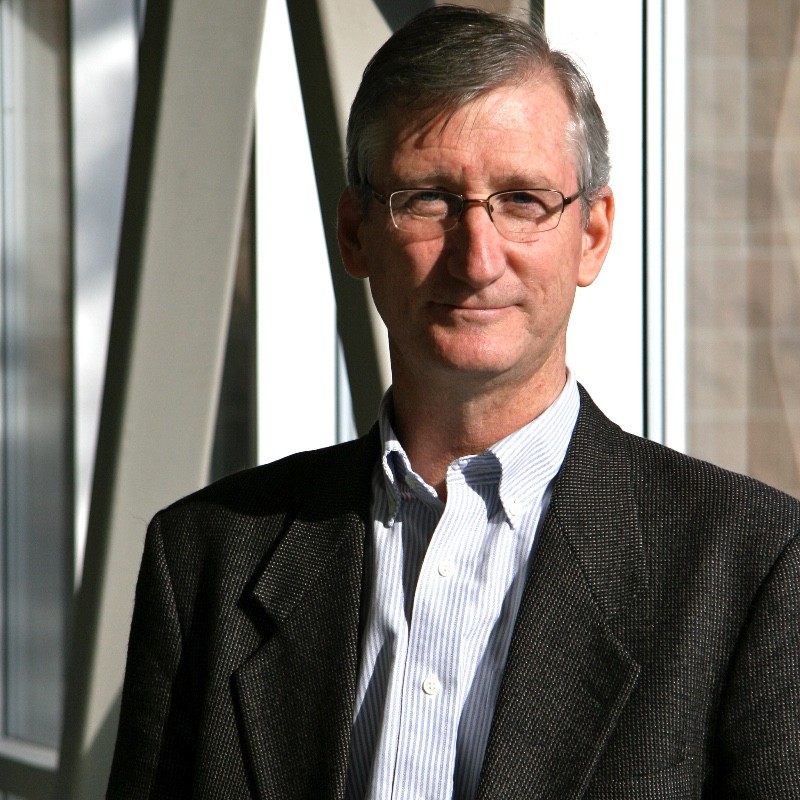
Dr. Bruce Gaulin is an experimental condensed matter physicist, working in the general area of scattering studies of exotic ground states in new, mostly magnetic, materials. Dr. Gaulin’s team makes new materials which they think will have interesting and exotic ground states, and then take these materials to forefront neutron and x-ray scattering facilities in North America and around the world. They perform scattering experiments on these new materials and then work either independently or with friends in theory to interpret the experiments, and thereby shed light on the exotic properties of the new materials.
Bruce Gaulin
Distinguished University Professor,
Physics & Astronomy
Brockhouse Chair in the Physics of Materials
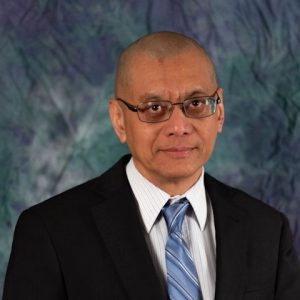
Pat Clancy
Assistant Professor,
Physics & Astronomy
Research Interests: The study of novel materials using x-ray and neutron scattering techniques.
Zin Tun
Adjunct Assistant Professor, Physics & Astronomy
Director of Instrument Development
Consultant, TVB Associates Inc.

Research Interests: Development of neutron sources, beam lines, and instrumentation
Dr. Zin Tun has been the scientific project leader for the design and construction of three neutron beamlines, including MacSANS valued at over $10M located at the former Canadian Neutron Beam Centre or the McMaster Nuclear Reactor (MNR). He is presently serving as the Director of Instrument Development for implementation of the CFI award, “Building a Future for Canadian Neutron Scattering” which will add three new neutron instruments to MNR. He is Canada’s most experienced expert on the design and construction of neutron beamlines.
Zin Tun
Adjunct Assistant Professor, Physics & Astronomy
Director of Instrument Development
Consultant, TVB Associates Inc.
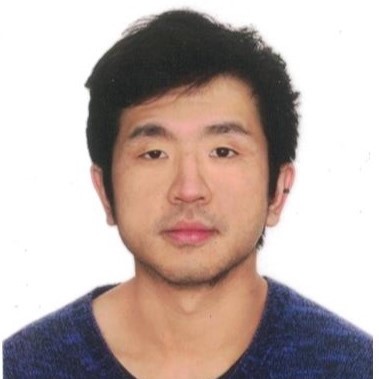
Mitchell DiPasquale
CNBL Facility Manager
Mitchell DiPasquale is the Facility Manager for the Canadian Neutron Beam Laboratory. Currently, he coordinates daily operations, instrument use and development projects, and user training. Previously, he held a postdoctoral fellowship position at the CNBL focussed on the construction and commissioning of the McMaster Small Angle Neutron Scattering (MacSANS) instrument.
Mitchell conducted his doctoral work at the University of Windsor with Prof. Drew Marquardt where he used neutron scattering to characterize the effect of vitamin E on the structure, organization, and energetics of model biological membranes.
Bo Yuan
Research Scientist
Instrument Scientist for MAD
Bo Yuan is a Research Scientist at the McMaster Nuclear Reactor (MNR), responsible for the operation and user support of the McMaster All-purpose Diffractometer (MAD). In 2024, he led the upgrade that replaced the point detector with the current linear detector, formerly the C2 detector from the NRU reactor at Chalk River. He is also involved in developing the new suite of neutron instruments at MNR.
In addition to his instrument responsibilities, he conducts research on quantum materials, ranging from transition metal to rare earth compounds, using bulk measurements and neutron/X-ray scattering techniques at MNR and other national neutron and synchrotron facilities worldwide.
He received his Ph.D. from the University of Toronto under the supervision of Prof. Young-June Kim, where he studied a broad range of quantum magnets using neutron and X-ray scattering. Before his current role as Research Scientist, he was an NSERC Postdoctoral Fellow at McMaster University working with Bruce Gaulin and Pat Clancy.
Eric Nicholson
Postdoctoral Fellow
Instrument Scientist for MacSANS
Research Interests: Radiation damage to nuclear materials, fusion energy materials, structure of matter.
Dr. Eric Nicholson is the instrument scientist for MacSANS where he is responsible for scientific investigations using the beamline as well as maintenance and upkeep of the instrument. He has a background in both hard and soft condensed matter and will do his best to understand the structure of your system to make productive use of the MacSANS instrument.
Eric holds a bachelor’s degree in engineering physics and a Ph.D. in materials science both from the University of Toronto. He has contributed understanding to the irradiation accelerated degradation of CANDU fuel channel materials in Chalk River, Ontario as R&D Scientist at Canadian Nuclear Laboratories and scattered neutrons at NRU as a DRSA RA/T. His doctoral work advised by Prof. JW Davis and Prof. CV Singh investigated the threshold displacement energy of irradiation damage by the mechanistic interpretation of materials characterizations of ion irradiation damaged materials using theoretical atomistic modelling. He has conducted characterization investigations of materials by neutron scattering and other techniques at the Canadian Neutron Beam Centre, Los Alamos Neutron Science Center, the Canadian Light Source and the National University of Singapore, publishing broadly on the structure of matter.
Jeffrey Mason
Technologist, Instrumentation and Cryogenics
Jeffrey Mason
Technologist, Instrumentation and Cryogenics
Aye Chan (Nova) Moe
Software Engineer
Developer with 10+ years’ experience in full-stack development, system integration, and EPICS-based solutions. Skilled in .NET, C#, Python, React, and SQL. Passionate about building efficient, scalable software.
Aye Chan (Nova) Moe
Software Engineer
Jonathan Hai
Research Engineer, Hardware and Controls
Jonathan Hai is a Distributed Control Systems Engineer supporting the Canadian Neutron Beam Laboratory’s instruments. With a background in mechatronics engineering, he develops and maintains control software for neutron diffraction and scattering experiments, with a focus on EPICS-based systems. His work bridges hardware integration and software reliability, ensuring researchers can conduct precise and reproducible experiments. Jonathan is passionate about creating intuitive, maintainable systems that empower scientific discovery.
Jonathan Hai
Research Engineer, Hardware and Controls
Daniel Banks
Project Manager
Consultant, TVB Associates Inc.
Daniel Banks
Project Manager
Consultant, TVB Associates Inc.
Jesse Berlin
Assistant Project Manager
Consultant, TVB Associates Inc.
Jesse Berlin
Assistant Project Manager
Consultant, TVB Associates Inc.
Jennifer Anderson
Administrative Coordinator
Jennifer Anderson
Administrative Coordinator
Bruce Gaulin
Distinguished University Professor,
Physics & Astronomy
Brockhouse Chair in the Physics of Materials
Research Interests: Geometrically frustrated magnets, Quantum Magnets with singlet ground states, High temperature superconductors.
Dr. Bruce Gaulin is an experimental condensed matter physicist, working in the general area of scattering studies of exotic ground states in new, mostly magnetic, materials. Dr. Gaulin’s team makes new materials which they think will have interesting and exotic ground states, and then take these materials to forefront neutron and x-ray scattering facilities in North America and around the world. They perform scattering experiments on these new materials and then work either independently or with friends in theory to interpret the experiments, and thereby shed light on the exotic properties of the new materials.
Bruce Gaulin
Distinguished University Professor,
Physics & Astronomy
Brockhouse Chair in the Physics of Materials
Research Interests: Geometrically frustrated magnets, Quantum Magnets with singlet ground states, High temperature superconductors.
Dr. Bruce Gaulin is an experimental condensed matter physicist, working in the general area of scattering studies of exotic ground states in new, mostly magnetic, materials. Dr. Gaulin’s team makes new materials which they think will have interesting and exotic ground states, and then take these materials to forefront neutron and x-ray scattering facilities in North America and around the world. They perform scattering experiments on these new materials and then work either independently or with friends in theory to interpret the experiments, and thereby shed light on the exotic properties of the new materials.
Pat Clancy
Assistant Professor,
Physics & Astronomy
Research Interests: The study of novel materials using x-ray and neutron scattering techniques.
Pat Clancy
Assistant Professor,
Physics & Astronomy
Research Interests: The study of novel materials using x-ray and neutron scattering techniques.
Zin Tun
Adjunct Assistant Professor, Physics & Astronomy
Director of Instrument Development
Consultant, TVB Associates Inc.
Research Interests: Development of neutron sources, beam lines, and instrumentation
Dr. Zin Tun has been the scientific project leader for the design and construction of three neutron beamlines, including MacSANS valued at over $10M located at the former Canadian Neutron Beam Centre or the McMaster Nuclear Reactor (MNR). He is presently serving as the Director of Instrument Development for implementation of the CFI award, “Building a Future for Canadian Neutron Scattering” which will add three new neutron instruments to MNR. He is Canada’s most experienced expert on the design and construction of neutron beamlines.
Zin Tun
Adjunct Assistant Professor, Physics & Astronomy
Director of Instrument Development
Consultant, TVB Associates Inc.
Research Interests: Development of neutron sources, beam lines, and instrumentation
Dr. Zin Tun has been the scientific project leader for the design and construction of three neutron beamlines, including MacSANS valued at over $10M located at the former Canadian Neutron Beam Centre or the McMaster Nuclear Reactor (MNR). He is presently serving as the Director of Instrument Development for implementation of the CFI award, “Building a Future for Canadian Neutron Scattering” which will add three new neutron instruments to MNR. He is Canada’s most experienced expert on the design and construction of neutron beamlines.
Mitchell DiPasquale
CNBL Facility Manager
Mitchell DiPasquale is the Facility Manager for the Canadian Neutron Beam Laboratory. Currently, he coordinates daily operations, instrument use and development projects, and user training. Previously, he held a postdoctoral fellowship position at the CNBL focussed on the construction and commissioning of the McMaster Small Angle Neutron Scattering (MacSANS) instrument.
Mitchell conducted his doctoral work at the University of Windsor with Prof. Drew Marquardt where he used neutron scattering to characterize the effect of vitamin E on the structure, organization, and energetics of model biological membranes.
Mitchell DiPasquale
CNBL Facility Manager
Mitchell DiPasquale is the Facility Manager for the Canadian Neutron Beam Laboratory. Currently, he coordinates daily operations, instrument use and development projects, and user training. Previously, he held a postdoctoral fellowship position at the CNBL focussed on the construction and commissioning of the McMaster Small Angle Neutron Scattering (MacSANS) instrument.
Mitchell conducted his doctoral work at the University of Windsor with Prof. Drew Marquardt where he used neutron scattering to characterize the effect of vitamin E on the structure, organization, and energetics of model biological membranes.
Bo Yuan
Research Scientist
Instrument Scientist for MAD
Bo Yuan is a Research Scientist at the McMaster Nuclear Reactor (MNR), responsible for the operation and user support of the McMaster All-purpose Diffractometer (MAD). In 2024, he led the upgrade that replaced the point detector with the current linear detector, formerly the C2 detector from the NRU reactor at Chalk River. He is also involved in developing the new suite of neutron instruments at MNR.
In addition to his instrument responsibilities, he conducts research on quantum materials, ranging from transition metal to rare earth compounds, using bulk measurements and neutron/X-ray scattering techniques at MNR and other national neutron and synchrotron facilities worldwide.
He received his Ph.D. from the University of Toronto under the supervision of Prof. Young-June Kim, where he studied a broad range of quantum magnets using neutron and X-ray scattering. Before his current role as Research Scientist, he was an NSERC Postdoctoral Fellow at McMaster University working with Bruce Gaulin and Pat Clancy.
Bo Yuan
Research Scientist
Instrument Scientist for MAD
Bo Yuan is a Research Scientist at the McMaster Nuclear Reactor (MNR), responsible for the operation and user support of the McMaster All-purpose Diffractometer (MAD). In 2024, he led the upgrade that replaced the point detector with the current linear detector, formerly the C2 detector from the NRU reactor at Chalk River. He is also involved in developing the new suite of neutron instruments at MNR.
In addition to his instrument responsibilities, he conducts research on quantum materials, ranging from transition metal to rare earth compounds, using bulk measurements and neutron/X-ray scattering techniques at MNR and other national neutron and synchrotron facilities worldwide.
He received his Ph.D. from the University of Toronto under the supervision of Prof. Young-June Kim, where he studied a broad range of quantum magnets using neutron and X-ray scattering. Before his current role as Research Scientist, he was an NSERC Postdoctoral Fellow at McMaster University working with Bruce Gaulin and Pat Clancy.
Eric Nicholson
Postdoctoral Fellow
Instrument Scientist for MacSANS
Research Interests: Radiation damage to nuclear materials, fusion energy materials, structure of matter.
Dr. Eric Nicholson is the instrument scientist for MacSANS where he is responsible for scientific investigations using the beamline as well as maintenance and upkeep of the instrument. He has a background in both hard and soft condensed matter and will do his best to understand the structure of your system to make productive use of the MacSANS instrument.
Eric holds a bachelor’s degree in engineering physics and a Ph.D. in materials science both from the University of Toronto. He has contributed understanding to the irradiation accelerated degradation of CANDU fuel channel materials in Chalk River, Ontario as R&D Scientist at Canadian Nuclear Laboratories and scattered neutrons at NRU as a DRSA RA/T. His doctoral work advised by Prof. JW Davis and Prof. CV Singh investigated the threshold displacement energy of irradiation damage by the mechanistic interpretation of materials characterizations of ion irradiation damaged materials using theoretical atomistic modelling. He has conducted characterization investigations of materials by neutron scattering and other techniques at the Canadian Neutron Beam Centre, Los Alamos Neutron Science Center, the Canadian Light Source and the National University of Singapore, publishing broadly on the structure of matter.
Eric Nicholson
Postdoctoral Fellow
Instrument Scientist for MacSANS
Research Interests: Radiation damage to nuclear materials, fusion energy materials, structure of matter.
Dr. Eric Nicholson is the instrument scientist for MacSANS where he is responsible for scientific investigations using the beamline as well as maintenance and upkeep of the instrument. He has a background in both hard and soft condensed matter and will do his best to understand the structure of your system to make productive use of the MacSANS instrument.
Eric holds a bachelor’s degree in engineering physics and a Ph.D. in materials science both from the University of Toronto. He has contributed understanding to the irradiation accelerated degradation of CANDU fuel channel materials in Chalk River, Ontario as R&D Scientist at Canadian Nuclear Laboratories and scattered neutrons at NRU as a DRSA RA/T. His doctoral work advised by Prof. JW Davis and Prof. CV Singh investigated the threshold displacement energy of irradiation damage by the mechanistic interpretation of materials characterizations of ion irradiation damaged materials using theoretical atomistic modelling. He has conducted characterization investigations of materials by neutron scattering and other techniques at the Canadian Neutron Beam Centre, Los Alamos Neutron Science Center, the Canadian Light Source and the National University of Singapore, publishing broadly on the structure of matter.
Jeffrey Mason
Technologist, Instrumentation and Cryogenics
Jeffrey Mason
Technologist, Instrumentation and Cryogenics
Aye Chan (Nova) Moe
Software Engineer
Developer with 10+ years’ experience in full-stack development, system integration, and EPICS-based solutions. Skilled in .NET, C#, Python, React, and SQL. Passionate about building efficient, scalable software.
Aye Chan (Nova) Moe
Software Engineer
Developer with 10+ years’ experience in full-stack development, system integration, and EPICS-based solutions. Skilled in .NET, C#, Python, React, and SQL. Passionate about building efficient, scalable software.
Jonathan Hai
Research Engineer, Hardware and Controls
Jonathan Hai is a Distributed Control Systems Engineer supporting the Canadian Neutron Beam Laboratory’s instruments. With a background in mechatronics engineering, he develops and maintains control software for neutron diffraction and scattering experiments, with a focus on EPICS-based systems. His work bridges hardware integration and software reliability, ensuring researchers can conduct precise and reproducible experiments. Jonathan is passionate about creating intuitive, maintainable systems that empower scientific discovery.
Jonathan Hai
Research Engineer, Hardware and Controls
Jonathan Hai is a Distributed Control Systems Engineer supporting the Canadian Neutron Beam Laboratory’s instruments. With a background in mechatronics engineering, he develops and maintains control software for neutron diffraction and scattering experiments, with a focus on EPICS-based systems. His work bridges hardware integration and software reliability, ensuring researchers can conduct precise and reproducible experiments. Jonathan is passionate about creating intuitive, maintainable systems that empower scientific discovery.
Daniel Banks
Project Manager
Consultant, TVB Associates Inc.
Daniel Banks
Project Manager
Consultant, TVB Associates Inc.
Jesse Berlin
Assistant Project Manager
Consultant, TVB Associates Inc.
Jesse Berlin
Assistant Project Manager
Consultant, TVB Associates Inc.
Jennifer Anderson
Administrative Coordinator
Jennifer Anderson
Administrative Coordinator
Resources
For all other inquiries, please email us.